When it comes to building muscle and optimizing recovery, protein is the king of nutrients. Whether you're hitting the weights hard or pushing through intense cardio sessions, your body needs quality protein to repair tissues, build muscle, and maintain energy levels. In this comprehensive guide, we'll explore the top 10 protein-rich foods that should be staples in every fitness enthusiast's diet.
Why Protein Matters for Fitness
Protein is composed of amino acids, which are the building blocks of muscle tissue. When you exercise, especially during resistance training, you create microscopic tears in your muscle fibers. Protein provides the essential amino acids needed to repair these tears, leading to muscle growth and strength gains.
Beyond muscle repair, protein also plays crucial roles in hormone production, enzyme function, immune support, and satiety (helping you feel full longer). For active individuals, adequate protein intake is non-negotiable for optimal performance and results.
Pro Tip
Aim to consume 20-30 grams of high-quality protein within 30-60 minutes after your workout to maximize muscle protein synthesis and recovery.
Top 10 Protein-Rich Foods
-
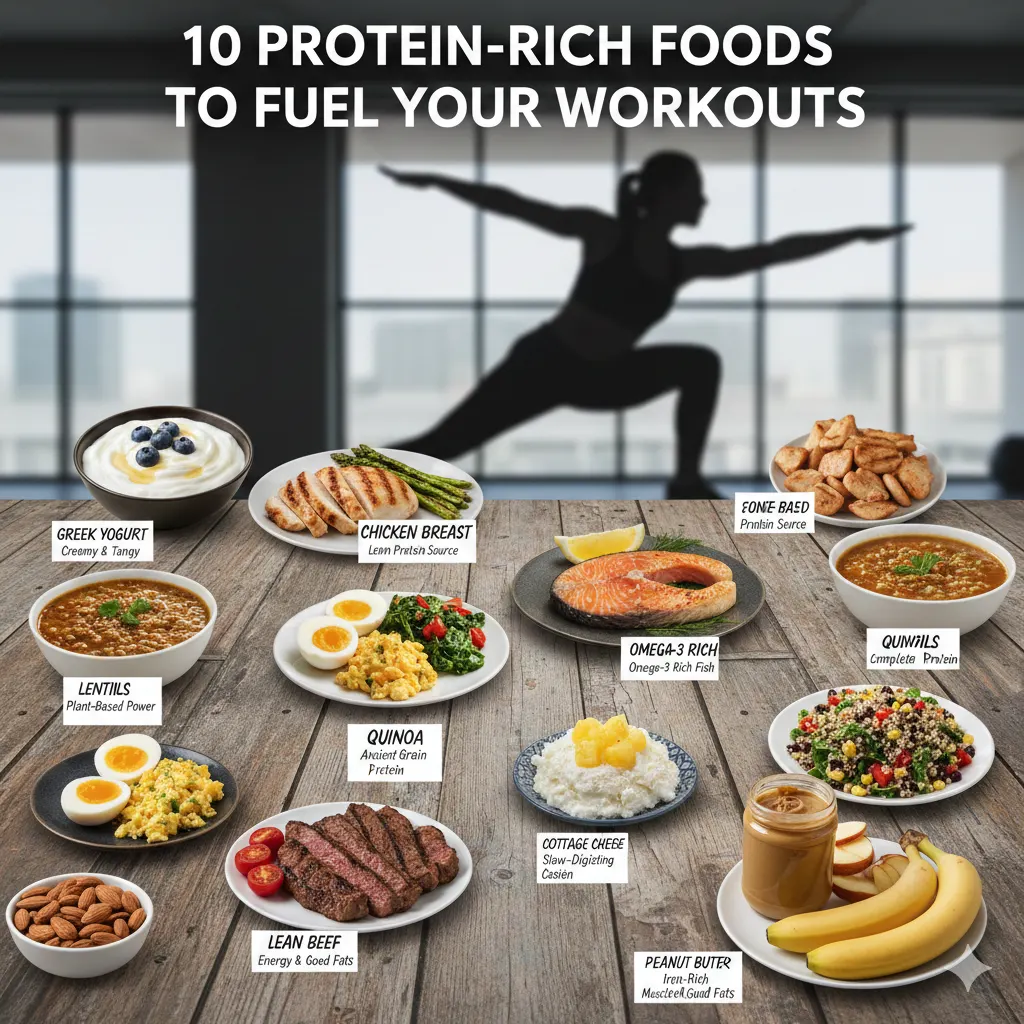
Chicken Breast - 31g protein per 100g serving. Lean, versatile, and packed with essential amino acids.
-
Salmon - 25g protein per 100g serving. Rich in omega-3 fatty acids that reduce inflammation.
-
Eggs - 6g protein per large egg. Complete protein source with all essential amino acids.
-
Greek Yogurt - 10g protein per 100g serving. Excellent source of casein protein for sustained release.
-
Lentils - 9g protein per 100g cooked. Perfect plant-based protein with high fiber content.
-
Tofu - 8g protein per 100g serving. Versatile soy protein great for vegetarians and vegans.
-
Lean Beef - 26g protein per 100g serving. Rich in creatine and iron for energy production.
-
Quinoa - 4g protein per 100g cooked. Complete plant protein with all nine essential amino acids.
-
Protein Powder - 20-30g protein per scoop. Convenient option for post-workout nutrition.
-
Almonds - 21g protein per 100g serving. Healthy fats and protein for sustained energy.
How to Incorporate These Foods
Incorporating these protein sources into your diet doesn't have to be complicated. Here's a sample day of eating for a fitness enthusiast:
Breakfast: 3-egg omelet with spinach and mushrooms (18g protein)
Snack: Greek yogurt with almonds (15g protein)
Lunch: Grilled chicken breast with quinoa and vegetables (35g protein)
Post-workout: Protein shake (25g protein)
Dinner: Salmon with sweet potato and asparagus (25g protein)
Timing Matters
While total daily protein intake is most important, timing can optimize results. Distribute your protein intake evenly across 4-5 meals throughout the day. The most critical times are:
Post-workout: 20-30g of fast-digesting protein within an hour of training
Pre-bed: Slow-digesting protein like casein (found in Greek yogurt or cottage cheese) to support overnight recovery